Home / Canola Watch / Dec.8, 2011 - Issue 28
-
Crop planning. Recognize the value of diversity. The more growers do to vary their practices — including rotation of crops, pest control products, and varieties — the harder it will……
-
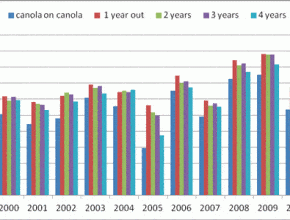
A recent Agriculture and Agri-Food Canada study found that growing peas and, to a lesser degree, lentils the year prior to canola can enhance canola yield. Canola on canola stubble will generally have lower yields than canola on other stubble…
-
Lack of crop diversity can increase the density of pests in a field. The higher the population of a pest in a field, the higher the risk of developing resistance to the pesticides (herbicide, fungicides or insecticides) used for controlling the pest in those fields…
-
Blackleg resistance is starting to show cracks in some areas where tight canola rotations have become normal practice. This is a reminder that the long-term viability of genetic resistance does require some rotation management on the growers’ part. This may be particularly true for clubroot resistant canola varieties, which have become a key clubroot management tool for growers with heavy…
-
New research shows a statistically significant increase in crop damage by root maggots in continuous canola rotations. This increased damage coincided with reduced yields…
-
The success of herbicide tolerant canola technology to control weeds is one reason why canola rotations have tightened. Economical weed control has increased canola profits. But the reduction in crop diversity can allow some weeds (and insects and diseases) adapted to growing with canola to increase in density and intensity. This places increased pressure on the chemical tools used to…
-
Taking a risk on a tight canola rotation may be the better economic decision for their farm that year. But having some diversity can help manage economic risk in the long term…
-
Crop Production Week, Saskatoon, January 9-12. SaskCanola’s meeting is Thursday, January 12. The Canola Council of Canada will join SaskCanola at its booth at the Crop Production Show all week.……
 Return to Canola Council Home